Shipyard Design Ledger · Regional Boatbuilding & Marina Infrastructure Orust · Jakobstad · Kokkola · Haderslev · Bergen
Shipyard Provenance & Craft

Builders: From Yard to Launch

To understand why a Scandinavian yacht handles steep head seas or retains structural stiffness after twenty winters ashore, one must look at how the regional boatyards are organized. Unlike high-volume assembly plants that rely on drop-in fiberglass inner pans to conceal hull skins, classical Nordic yards build structural bulkheads directly into the hull while it still rests inside the female lamination mold.

This build philosophy turns every berth base, hanging locker divider, and tank baffle into a load-bearing web that resists torsional twist from high rig tensions or quartering storm waves.

Understand the Vessel
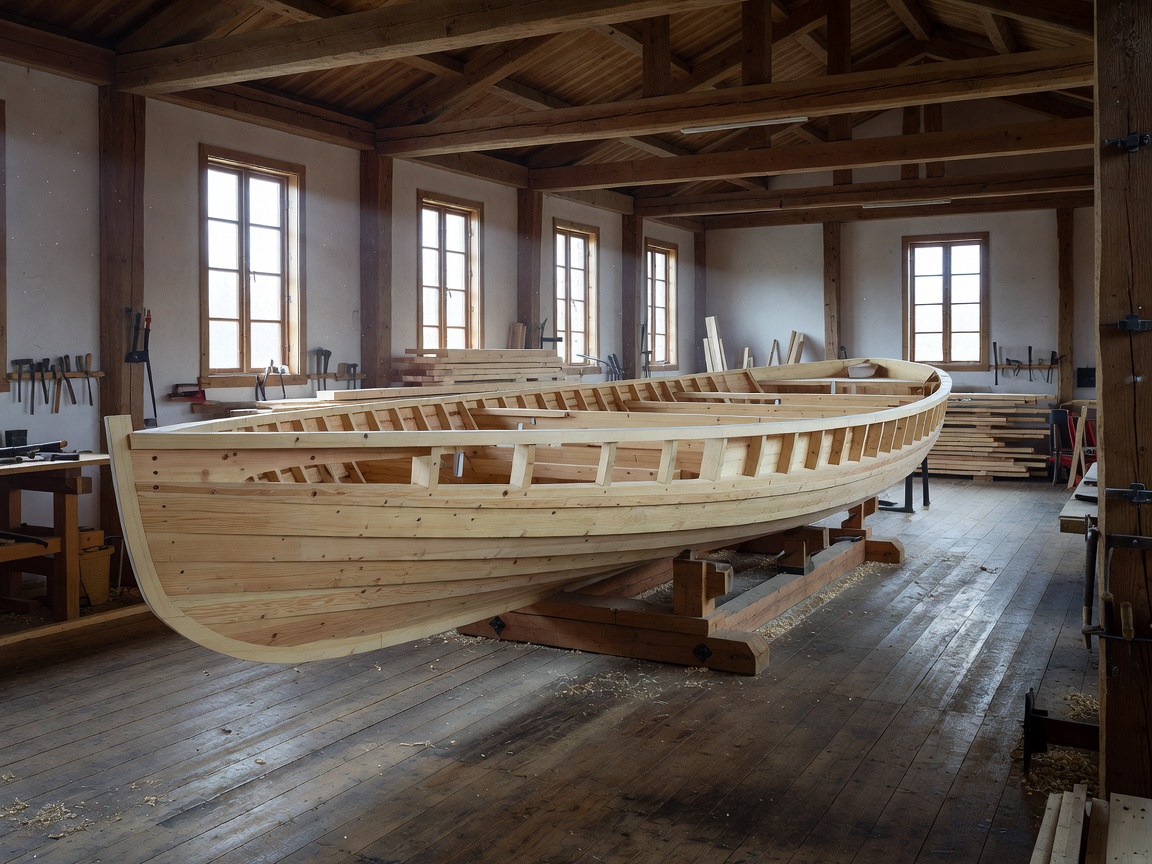
Interior of a Scandinavian boatbuilding hall showing a yacht hull in a framing cradle with timber bulkheads
In-mold bulkhead lamination on the island of Orust: bonding structural plywood directly to the hull shell.
Region I · Bohuslän & The Island of Orust, Sweden

The West Coast Cruising Lineage

Along the indented granite coastline north of Gothenburg, towns such as Ellös, Henån, Vindön, and Kungsviken form the historical core of Swedish cruising yacht production. Yards including Hallberg-Rassy, Najad, Arcona, and Malö developed vessels tailored for couples sailing long distances without paid crew.

Key architectural signatures include deep, fixed tempered-glass windshields (or hard dodgers) that protect the forward cockpit watchkeeper from cold spray, integral rubbing strakes molded into the hull below the sheerline to fend off timber pilings, and generous engine rooms accessible through walk-in doors rather than removable companionway steps alone.

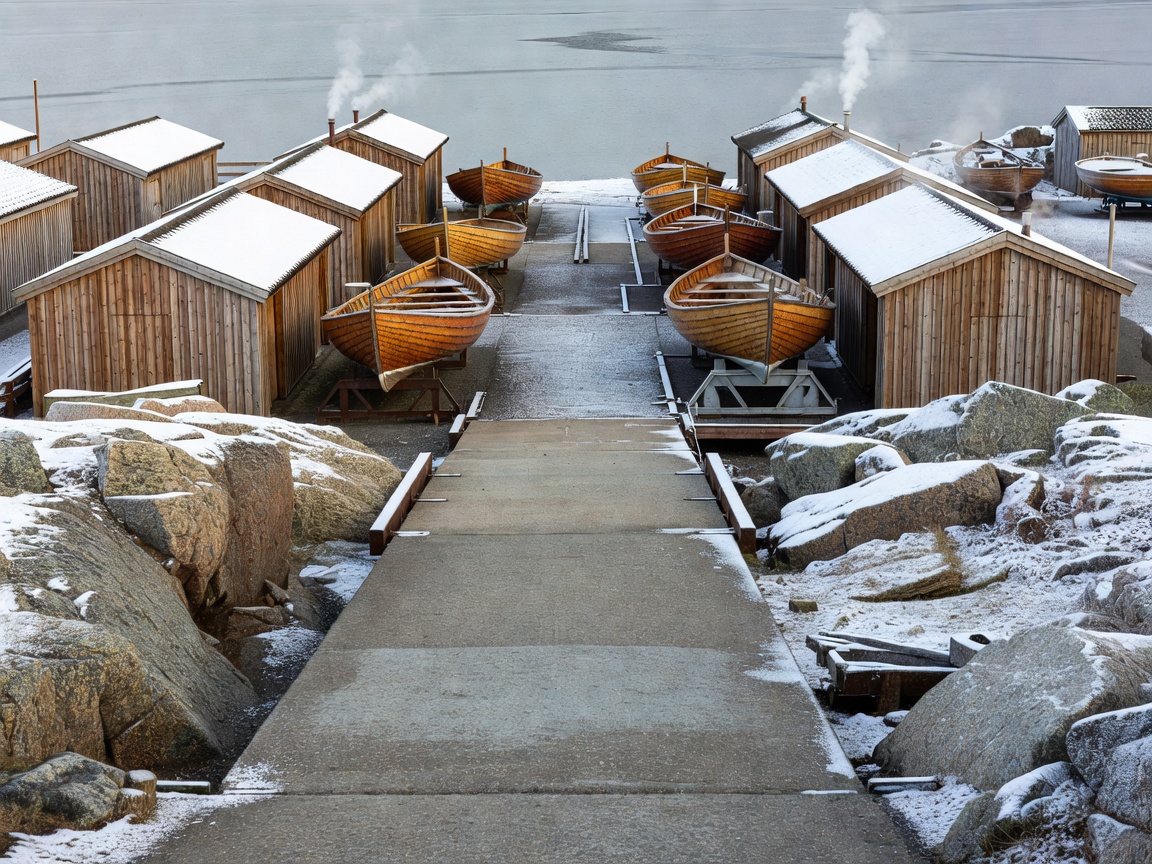
Swedish boatyard slipway flanked by granite rocks and heated winter storage sheds in Ellös
Ellös and Vindön harbor basins: sheltered trial waters opening directly onto the Skagerrak.
Region II · Ostrobothnia, Finland (Jakobstad & Kokkola)

Carbon Precision & Pilothouse Commuters

Five hundred miles northeast across the Gulf of Bothnia, the Finnish coastal cities of Jakobstad (Pietarsaari) and Kokkola host two distinct yet complementary disciplines: grand-prix ocean sailing yachts (such as Nautor Swan and Baltic Yachts) and rugged all-weather wheelhouse motor vessels (such as Sargo, Targa by Botnia Marin, and Nord Star).

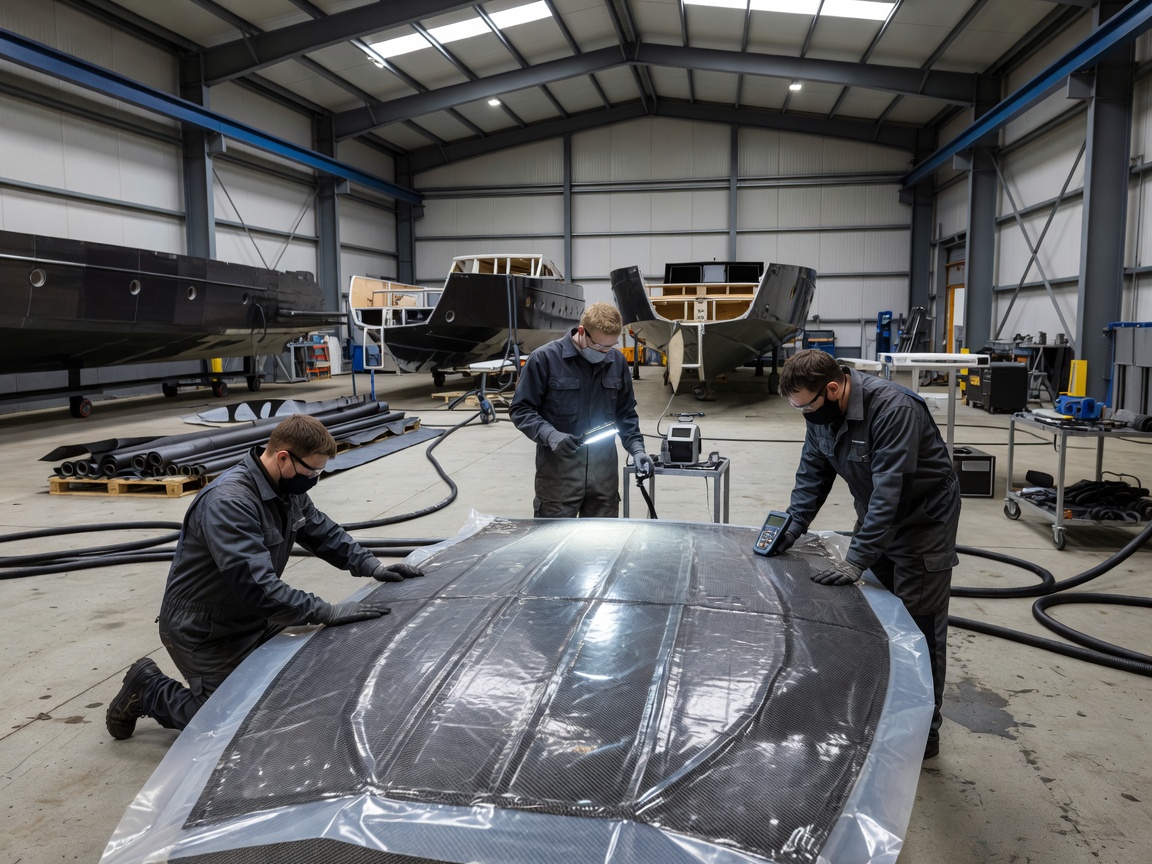
In the composite halls of Jakobstad, hulls are cured in computer-monitored ovens using pre-impregnated carbon fiber over Nomex or Corecell foam, weighing every batch of resin to maintain an exact fiber-to-resin ratio. Just down the road, motorboat builders refine foam-injected deep-V hulls with walkaround teak decks and sliding pilothouse doors designed for year-round archipelago transport before the sea freezes.

Technicians inspecting vacuum-bagged carbon fiber yacht deck laminate inside a Finnish shipyard
Vacuum-bagged carbon-epoxy post-curing and ultrasonic non-destructive laminate inspection in Ostrobothnia.
Comparative Yard Ledger

Borderless Builder Profiles & Engineering Focus

Each Scandinavian boatbuilding school prioritizes a distinct set of structural and operational parameters. Review how regional yards allocate displacement, rig geometry, and machinery access.

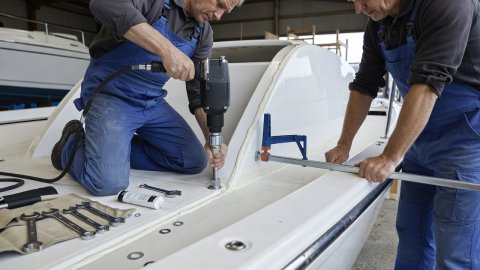
Hull and deck joint of a Swedish center-cockpit yacht being bolted and bonded Orust & West Sweden Cluster

Hallberg-Rassy / Najad / Regina af Vindö

Focused on long-horizon bluewater liveaboards. Hulls use insulated closed-cell foam above the waterline for thermal comfort and solid laminate along the centerline keel pan and thruster tunnels.

  • Hull-to-Deck JointLaminated or Bulwark-Bolted
  • Ballast MaterialAntimony-Hardened Lead
  • Signature DetailFixed Windshield & Deep Bilge
Review keel & laminate engineering
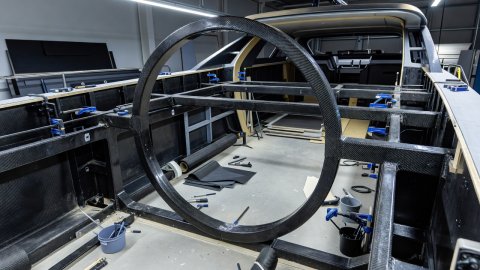
Carbon fiber ring frame inside a Finnish performance cruising yacht under construction Jakobstad Composite Cluster

Nautor Swan / Baltic Yachts

Focused on high-aspect appendages, carbon-epoxy structural grids, and flush deck hardware. Weight saved in the hull laminate is transferred directly into lower center-of-gravity keel bulbs.

  • Hull-to-Deck JointHigh-Strength Epoxy Flange
  • Keel ConfigurationT-Bulb / Telescopic Lifting
  • Signature DetailSub-Deck Hydraulic Runs
Inspect lightweight cored joinery
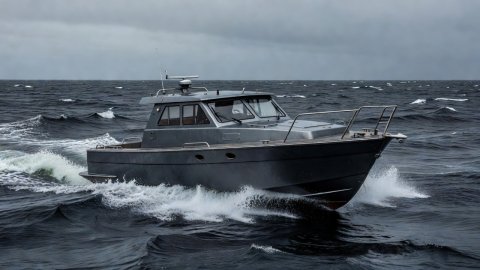
All-weather Finnish walkaround pilothouse motor yacht running through dark Baltic chop Kokkola & Archipelago Motor Cluster

Targa / Sargo / Nord Star / Windy

Engineered for rapid passage through steep, confused coastal chop. Deep deadrise angles at the transom (20° to 24°) soften vertical accelerations while full-walkaround side decks simplify single-handed docking.

  • Transom Deadrise20° – 24° Deep-V
  • Bridge AccessPort & Starboard Sliding Doors
  • Signature DetailReverse-Sloped Glare Shield
Explore pilothouse bridge layouts
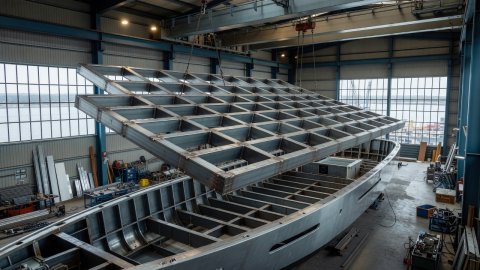
Galvanized steel hull girder grid being lowered into a Danish performance cruiser Danish & Stockholm Performance Cluster

X-Yachts / Linjett / Arcona

Built around a hot-dip galvanized or carbon-fiber internal floor grid that absorbs keel canting loads, mast compression, and shrouds in a single unified chassis.

  • Structural ChassisSteel / Carbon Internal Grid
  • Rigging SpecDiscontinuous Rod / Carbon Mast
  • Signature DetailRecessed Hull Thru-Hulls
Read chassis load analysis
Nordic Marina Infrastructure & Winter Care

Full-Service Wintering & Refit Yards

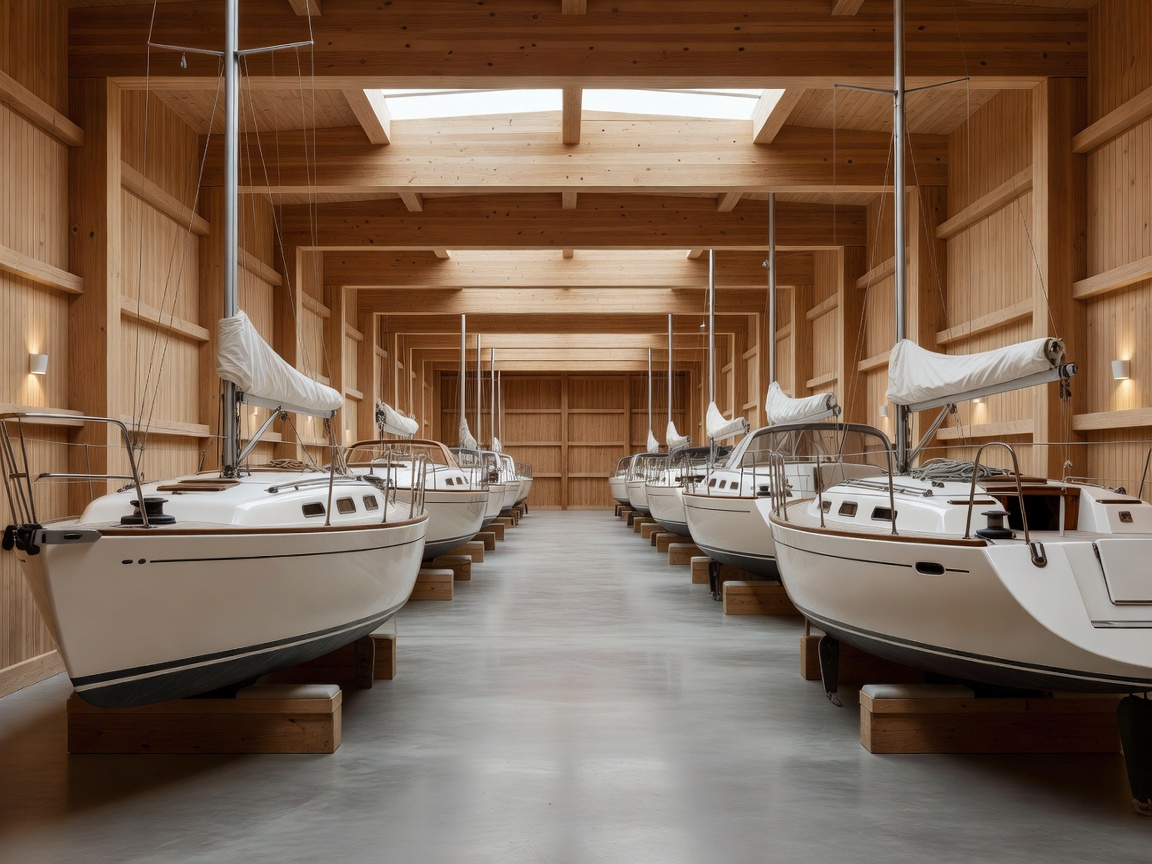
In northern latitudes, the boating season spans five to six months on the water followed by six months inside climate-controlled winter storage halls. Marinas in Bullandö (Stockholm Archipelago), Marstrand, Hanko, Skagen, and Bergen are not merely floating pontoons; they are technical refit hubs equipped with 60-to-150-ton travel lifts, mast cranes, and dehumidified sheds kept at +8°C to +12°C.

When a vessel is hauled each October, yards pressure-wash the bottom, inspect anode depletion, test raw-water freeze protection, unstep masts for dye-penetrant terminal checks, and re-varnish exterior brightwork. This annual preventive cycle explains why thirty-year-old Nordic yachts frequently exhibit dryer balsa or foam cores than five-year-old vessels left continuously afloat in tropical waters.
Row of Scandinavian yachts stored inside a clean heated timber winter hall with masts unstepped
Heated indoor winter storage in Bohuslän: annual rigging inspection and controlled hull moisture levels.